NeuroSyncAI™
Human evolution is no longer only biological. It is now biological, cognitive, emotional, technological, civilizational, ecological, and artificial at the same time.
This project brings together Trang Framework, AMOS OS, Heritage Decision Intelligence, Bio-Logical Computing, civilization memory, AI governance, and 21st-century frontier problems into one public framework.
Not a belief system. Not a claim that all questions are solved. A structured map for studying where human evolution is breaking, mutating, adapting, repairing, and transforming.
A reality architecture for the next stage of human intelligence, civilization, and AI.
Humanity has advanced technologically faster than it has evolved structurally.We have powerful AI, global markets, ancient monuments, climate models, medical power, infinite data, planetary risk, and intelligent machines.
But we still have weak truth systems, fragile nervous systems, incomplete civilizational memory, poor collective repair speed, rising chronic dysregulation, collapsing trust, short-term governance, and no complete agreement on what intelligence or consciousness requires.
The result:
A civilization with high capability and low integration.



AI without wisdom
Machines can scale intelligence faster than humans can scale ethics. AI can generate language, images, code, strategy, persuasion, synthetic identity, and decision support at planetary speed.
But human truth systems, governance systems, emotional regulation, and institutional accountability have not evolved at the same pace.
Core problem: intelligence is being amplified before wisdom, consequence, and repair capacity are structurally mature.
Climate without coordination
Planetary systems are changing faster than institutions can repair. Humanity has climate models, satellite data, emissions tracking, and risk forecasts.
But collective action is slowed by political fragmentation, short-term incentives, market dependency, weak trust, and delayed repair.
Core problem: the planet operates as an integrated system, while human governance still acts in fragments.
Data without accountibility
Information abundance is destroying shared reality.
Civilization now produces more content, images, signals, narratives, claims, and synthetic evidence than humans can verify.
Data is expanding, but trust is collapsing.
Core problem: when every system can generate information, but few systems can preserve truth, civilization loses its shared reality layer.


Civilization without memory
Modern systems forget the cultural, ecological, and biological knowledge that made survival possible.
Ancient monuments, rituals, water systems, agricultural calendars, myths, law, architecture, and inherited symbols may contain compressed memory about risk, timing, collapse, and repair.
Core problem: civilization becomes fragile when it loses access to the memory systems that once taught humans how to survive long cycles.
About the project
Project Human Evolution is the result of years of research, systems thinking, and real-world experience developed by Trang Phan across human development, organizational transformation, and intelligent systems design.
Drawing from work that spans strategy, education, technology, and complex problem-solving, the project brings together insights, frameworks, and practical approaches for helping people and institutions navigate an increasingly interconnected world.
Through initiatives such as AMOS, Trang Framework, and related research, Project Human Evolution explores how human potential, ethical intelligence, and systemic thinking can be applied to create meaningful and sustainable progress.
At its core, Project Human Evolution is more than a platform. It is a long-term vision shaped by experience and continuous learning, dedicated to advancing human capability, responsible innovation, and the future of human and intelligent system collaboration.


The central question of Project Human Evolution is:
Can humanity evolve fast enough to repair the systems it has already destabilized?
WHAT THIS PROJECT IS
Project Human Evolution is a public knowledge system for five connected domains.
Human Evolution
The study of how human intelligence evolves through body, emotion, cognition, memory, identity, culture, technology, and environment.
Reality Architecture
The structural model of how systems emerge from potential, distinction, relation, constraint, boundary, memory, entropy pressure, mutation, selection, repair, recursion, observation, symbolic compression, civilization, meta-awareness, and gap ontology.
This primary architecture sequence is: Pre-generative substrate → Possibility → Asymmetry → Distinction → Relation → Constraint → Boundary → Persistence → Memory → Entropy pressure → Mutation → Selection → Repair → Recursion → Observer → Symbolic compression → Civilization → Meta-awareness → Gap ontology.
Heritage Intelligence
Heritage Decision Intelligence is a decision-governance layer for uncertainty, inheritance, hidden signal, civilizational memory, and long-horizon consequence.
It is not deterministic prophecy.
It is not mystical certainty.
It is a framework for making better decisions when the full system is not visible.
21st-Century Unknowns
The project studies the problems that modern civilization still does not fully understand: consciousness, AI alignment, deepfake reality collapse, climate tipping points, water stress, microplastics, antibiotic resistance, ancient engineering, civilization collapse, dark matter, time, and the origin of life.
THE H / M / L MAP
Every system must be read across three layers. The core rule is : A local gain that destroys the high-level system is not success. A high-level ideal that cannot translate into local action is not usable. The mediator layer is where evolution either stabilizes or fails.
L — Local / Foundation
The base layer.
Body.
Cell.
Daily action.
Local event.
Household.
Worker.
Sensor.
Data point.
Immediate decision.
L is where reality touches the ground. If L is weak, the system cannot hold weight.
M — Mediator / Relational
The connection layer.
Nervous system.
Family.
Organization.
Institution.
Market.
Interface.
Law.
Language.
Cultural operating layer.
M is where local parts become coordinated systems. If M breaks, the system fragments.
H — High / Global
The organizing layer.
Civilization.
Planet.
Long-term mission.
Worldview.
Governance structure.
Mythology.
Symbolic system.
Future horizon.
H is where systems become meaning, direction, and strategy. If H cannot translate back into L, it becomes abstraction.
Why Human Evolution has changed
For most of history, human evolution was constrained by biology, ecology, geography, family systems, climate, disease, food, ritual, tool use, and culture.
In the 21st century, human evolution is also shaped by: AI systems, algorithmic attention, synthetic media, data surveillance, biotechnology, brain-computer interfaces, climate instability, chemical exposure, microplastics, urban isolation, falling fertility, institutional mistrust, economic pressure, civilizational memory loss, and accelerating knowledge fragmentation.
The human is now evolving inside systems that evolve faster than the nervous system can naturally metabolize. This is the evolutionary pressure of the century.


The Framework Stack


Trang ∅ Framework / Khung Trang
The master framework
Khung Trang is the root architecture for reading complex systems through fractal structure, entropy, lacunarity, mutation, survival, cascade, and Tát 2 cross-validation.
Core idea: Every complex system can be decomposed into [L, M, H]:
L — foundation, substrate, memory, low entropy
M — mediator, connection, rhythm, coordination
H — peak, abstraction, language, leadership, creation
This framework is the parent system. The other five frameworks are operating parts inside it.


AMOS - Absolute Meta Operating System for AI
Heritage Decision Intelligence
All six frameworks are expressions of the same recursive architecture at different scales and domains.
The Structural Reasoning Engine
AMOS is the thinking engine of the project. It translates complex human, cultural, symbolic, scientific, emotional, and civilizational material into structured logic.
Its role is not to replace human judgment, but to expose hidden gaps, organize frameworks, map contradictions, and turn scattered knowledge into usable research architecture.
Core function: Turns messy complexity into clean structural reasoning.
The Ancestral Memory / Uncertainty Framework
Heritage Decision Intelligence reads the past as compressed survival intelligence, not nostalgia.
It studies how cultural memory, ancient architecture, myth, ritual, water systems, agriculture, law, and inherited symbols may preserve signals about risk, timing, collapse, identity, and repair.
It is the decision layer for acting under uncertainty when modern data is incomplete but historical pattern still speaks.
Core function: Extracts hidden signal from memory, history, culture, and incomplete information.


Bio-Logical Intelligence
The Human Evolution Framework
Bio-Logical Intelligence studies human intelligence as a living system, not only abstract thinking.
It includes body state, emotion, cognition, instinct, intuition, memory, identity, regulation, environment, and repair.
Core idea: Emotion is biological signal logic. Intuition is compressed logic. Instinct is stored logic. Cognition depends on body state, memory continuity, and regulation.
Core function: Maps how humans evolve, destabilize, recover, and increase intelligence through biological integration.


Civilization Systems
Bio-Logical Computing
The Civilization Repair Framework
Civilization Systems reads societies as recursive memory structures distributed across land, law, agriculture, ritual, language, architecture, institutions, infrastructure, ecology, and shared correction capacity.
It studies how civilizations stabilize, mutate, decay, collapse, and repair.
Core idea: A civilization survives when its repair capacity exceeds its accumulated entropy, contradiction, distortion, and future debt.
Core function: Maps civilization risk, institutional decay, planetary pressure, and long-horizon repair.
The Computing Method
Bio-Logical Computing is the computing discipline behind AMOS.
It designs AI and software as organism-like systems with memory, boundaries, routing, repair, feedback, integrity, self-audit, and consequence control.
Instead of treating software as detached code, it treats computation as structured cognition moving through kernels, engines, agents, domains, constraints, and validation layers.
Core function: Builds deterministic, self-auditing, biologically grounded AI architecture.
RESEARCH DOMAINS
Every system must be read across three layers. The core rule is : A local gain that destroys the high-level system is not success. A high-level ideal that cannot translate into local action is not usable. The mediator layer is where evolution either stabilizes or fails.
Ancient Intelligence
Pyramids
Megaliths
Ancient water systems
Astronomical alignments
Ritual architecture
Acoustic chambers
Civilization collapse
Flood memory
Symbol systems
Agricultural calendars
City orientation
Sacred geometry as social coordination
Myth as disaster memory
Architecture as governance
Labor systems before machines
Core question: What did ancient civilizations know about organizing humans, environment, time, memory, and meaning that modern civilization has forgotten?
Human Consciousness
Awareness
Selfhood
Dreams
Déjà vu
Intuition
Trance
Meditation
Near-death experiences
Out-of-body experiences
Memory distortion
Placebo and nocebo
Embodied cognition
Somatic intelligence
Identity continuity
The hard problem of consciousness
Core question: What is the minimum structure required for a system to have owned state, memory continuity, self-reference, consequence integration, and repair?
AI and Artificial Intelligence
AI hallucination
Alignment
Agentic systems
Synthetic identity
Machine self-reference
Deepfake reality collapse
Algorithmic persuasion
Human-AI dependence
AI governance
AI organisms
Cognitive operating systems
Machine-generated culture
Privacy of thought
Brain-computer interfaces
Truth verification systems
Core question: Can humanity build artificial intelligence without destroying shared reality, human agency, and institutional trust?
Civilization Risk
Climate tipping points
Water crisis
Soil degradation
Food system fragility
Antibiotic resistance
Pandemic risk
Supply-chain collapse
Cyberattacks
Financial instability
Institutional mistrust
Population aging
Fertility collapse
War without bullets
Information warfare
Governance lag
Core question: Can civilization repair faster than its entropy accumulates?
Biology and Human Adaptation
Nervous-system overload
Chronic stress
Urban isolation
Attention fragmentation
Sleep disruption
Chemical exposure
Microplastics
Fertility decline
Mental health pressure
Embodied cognition
Trauma transmission
Intergenerational memory
Collective dysregulation
Regulation and recovery
Human performance under system pressure
Core question: Is modern civilization asking the human nervous system to live outside its viable operating range?
Planetary Intelligence
Earth systems
Climate feedback
Ocean systems
Biodiversity
Migration
Ecological memory
Agriculture
Water cycles
Soil systems
Atmospheric change
Planetary boundaries
Human-planet coupling
Resource constraints
Long-horizon survival
Regenerative governance
Core question: Can intelligence be measured by whether it preserves the conditions that allow it to exist?



Featured books


The 99% Mind
From Brain Myths to Meta-Intelligence
A book about the hidden majority of intelligence: the part of mind, perception, intuition, body logic, and meta-awareness that traditional brain models do not fully explain. It reframes intelligence as layered, biological, structural, and partially invisible to ordinary cognition.


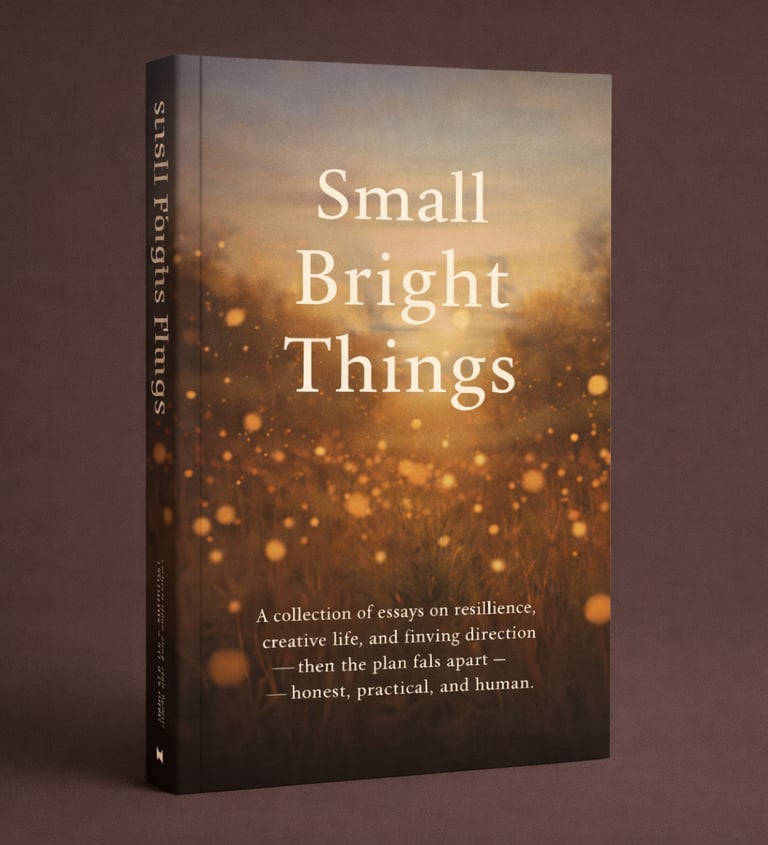

The Fractal Architecture of Reality
From Brain Myths to Meta-Intelligence
A book about the hidden majority of intelligence: the part of mind, perception, intuition, body logic, and meta-awareness that traditional brain models do not fully explain. It reframes intelligence as layered, biological, structural, and partially invisible to ordinary cognition.
Heritage Intelligence
Reading the Past as Compressed Survival Signal
Heritage Intelligence is a book about how culture, architecture, ritual, myth, law, agriculture, water systems, symbols, and inherited memory can preserve signals about risk, timing, collapse, identity, and repair. It does not treat heritage as nostalgia. It treats heritage as a decision system for uncertainty. When modern data is incomplete, historical pattern may still carry signal.
A book about the hidden majority of intelligence: the part of mind, perception, intuition, body logic, and meta-awareness that traditional brain
FEATURED FRONTIER QUESTIONS
Can intelligence preserve the conditions that allow it to exist?


Can intelligence be measured by whether it preserves the conditions that allow it to exist?
Ancient monuments may have stored memory through stone, ritual, sky alignment, water, sound, procession, and social coordination.


Ancient Monuments as Memory Systems
Science depends on awareness, but awareness itself remains unresolved. Language, data, and self-report are not enough.
Consciousness and the Observer Problem
AI hallucination is a warning: coherence without grounding can leak false reality into human systems.


AI Hallucination and Reality Leakage
When image, voice, video, and identity can be fabricated, civilization needs a new verification architecture.



Deepfakes and the Collapse of Evidence
Climate, water, soil, oceans, and institutions can cross thresholds faster than humans repair them.
Evolution Against Medicine
Antibiotic resistance shows evolution moving against medical progress through variation, selection, transmission, and repair failure.
THE PUBLIC PROMISE
Project Human Evolution will not pretend that the unknown is already solved. It will not collapse mystery into superstition or dismissal. It will hold the gap open long enough to study it.
The promise: more structure, less noise. More courage, less false certainty. More memory, less amnesia. More repair, less collapse. More evolution, less drift.
CONTACT / COLLABORATION
For research, writing, institutional collaboration, AMOS public-layer development, Heritage Decision Intelligence, or Project Human Evolution partnerships: Contact Trang Phan / Project Human Evolution.
Collaboration areas:
Research publication
AI governance
Human evolution theory
Ancient civilization research
Heritage intelligence
Civilization repair
Decision architecture
Educational programs
Public knowledge systems
AMOS public interface development


Public architecture for human evolution, AMOS OS, Heritage Decision Intelligence, Trang Franework, civilization repair, and 21st-century unknowns. This website presents public-facing structural models. It does not claim empirical proof for symbolic or speculative frameworks unless independently verified. It does not replace medical, legal, financial, scientific, or engineering professionals.
© Trang Phan. All rights reserved.